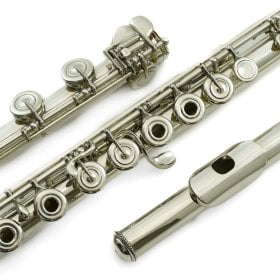
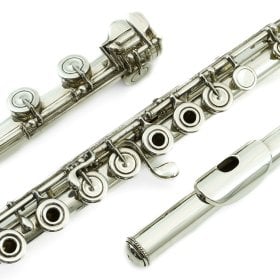
1888 – The Beginning
In 1888, Eduard Heindl, Principal Flutist of the Boston Symphony Orchestra, commissioned Rhode Island-based silversmiths William and George Haynes to create a wooden Boehm system flute.
William and George began their flute-making journey at the JC Haynes Company (unrelated to the Haynes brothers) in Boston, quickly becoming the core of the operation.
The first 506 flutes crafted by the Haynes brothers were branded with the JC Haynes “Bay State Flute Company” name. The first flute marked as a Wm. S. Haynes Co. instrument is #507. The brothers chose to mark the founding of the Wm. S. Haynes Company as 1888.
1891 – Workshop Moves to Chapman Place, Boston
1893 – Workshop Moves to Sudbury Street, Boston
1896 – First Gold Flute Made in America
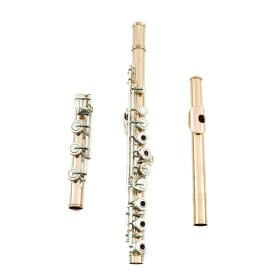
In 1896, William Haynes crafted the first American-made gold flute, made of 18k gold with an ivory embouchure, sterling silver keys, and gold inlays. This flute was created for Henry Jaeger, the Principal Flutist of the US Marine Band.
1897 – Workshop Moves to Stanhope Street, Boston
1898 – Invention of Drawn Toneholes
In 1898, George Haynes invented the drawn tonehole manufacturing technique on an Alto Flute in F. This flute was uniquely crafted using silver dollars and a $20 gold piece.
Since this groundbreaking invention, Haynes has consistently offered handmade, drawn tonehole professional flutes and continues to do so to this day.
1900 – Workshop Moves to Washington Street, Boston
1900 – Haynes Flute #507 Completed, the First with the Wm. S. Haynes Co. Logo
1902 – Haynes Creates First E-Flat and D-Flat Soprano Flutes
In 1902, Haynes produced a limited number of “Little Haynes” flutes made to order, including the E-flat Soprano Flute and the D-flat Soprano Flute.
1906 – Haynes Creates Left-Handed, Wooden Boehm System Flute
1907 – Workshop Moves to Washington Street, Boston
1910 – Collaboration with Charles Howe
In 1910, Haynes collaborated with renowned flute educator Charles Howe, marking the company’s first partnership with prominent teachers and artists. Haynes crafted a flute to Howe’s specifications, including a G-A trill key, a tuning slide, and a thumb rest. Howe was a famous flute educator and the author of one of the first widely published flute tutorials.
1912 – Haynes Showroom opens at 61 Hanover Street, Boston
1913 – Verne Q Powell is employed at Wm. S. Haynes Co.
1914 – Additional workshop added at Elm Street, Boston
1914 – Haynes makes its first all-18K gold flute #2833.
1915 – Haynes Creates First Solid Silver Piccolo, #3188
1916 – Collaboration with Flutist Emil Medicus
1918 – Workshop Moves to 34 Columbus Avenue, Boston
1918 – First A-Flat Piccolo Made in Response to Requests from American Bands, #4546
1918 – Wooden Flute Production Ceases, Except for Special Orders
1919 – Georges Barrère Becomes Artist Advisor
In 1919, Georges Barrère, then principal flutist with the New York Symphony, was appointed Artist Advisor to Haynes. Together, Haynes and Barrère developed the American version of the French flute. The early models featured “Y” arms, while later experimental flutes included French-style pointed key cups. The pair carefully studied French flutes and made modifications that enhanced both the sound and functionality of the instruments.
During this period, orders for silver flutes surpassed and nearly replaced those for wooden flutes. Haynes introduced the soldered tonehole model, which gained international popularity for its superior sound and reliable mechanics. The Haynes flutes attracted major flutists, as evidenced by the sales recorded in the company logbooks, which include famous players such as Barrère (New York Symphony), William Kincaid (Philadelphia Orchestra), Leonardo De Lorenzo (New York Philharmonic), Georges Laurent (Boston Symphony), and John Wummer (New York Philharmonic).
1921 – Workshop moves to 135 Columbus Avenue, Boston
1922 – Haynes opens the first New York City Boutique, which is run and managed by George Haynes on W 44th Street, NYC
1922 – Dayton C. Miller – physicist, astronomer, acoustician, and amateur flutist, begins a long relationship with Wm. S. Haynes.
1922 – Haynes collaborates with Georges Barrère to make a flute “with perforated keys” (open holes).
1926 – Haynes begins to make Silver Clarinets – making a total of 334 instruments until production ceased in 1942
1926 – Verne Q Powell leaves the company gifting a hand-engraved watch to William Haynes before his departure.
1935 – For reasons of superstition – there are no #13xxx flutes made – Haynes production jumps from #12999 to #14000.
Many #xx013 serial numbered flutes were also skipped during this time.
1935 – Platinum Haynes Flute #14000
In 1935 Georges Barrère commissioned a platinum flute #14000 from Wm. S. Haynes Co. This flute would be the world’s very first all-platinum instrument. To commemorate the premiere of this important flute, Edgard Varèse´ wrote ‘Density 21.5’ which Barrère premiered on the debut concert of this flute. 21.5 is the density of platinum.
1936 – Haynes makes an “Overtone Flute” as an educational tool for teaching about harmonics
1936 – William Haynes retires and moves to Florida. His wife, Lola Haynes, takes ownership of the Wm. S. Haynes Company.
1939 – William Sherman Haynes dies at his home in Florida. He is buried at Mt. Auburn Cemetery in Cambridge, MA.
1940 – During the war years, it is very difficult to obtain precious metals. In order to continue making instruments, the Wm. S. Haynes Company obtains government contracts. The Wm. Haynes Company still makes flutes for military bands and orchestras around the world.
1941 – Lewis “Lew” Deveau joins the company and eventually becomes President and owner.
1947 – Haynes Workshop moves to 108 Massachusetts Avenue, Boston
1949 – L. Mont Allison becomes Director and President of the Company. Lola Haynes maintains ownership.
1953 – Workshop moves to 12 Piedmont Street, Boston which would be the home of Haynes for the next 50 years.
1957 – Phillip Kaplan – Second Flutist in the Boston Symphony Orchestra becomes a consultant to the company.
1958 – Jean-Pierre Rampal gives his debut concert in the United States at the Library of Congress in Washington DC.
1959 – Haynes creates flute #29333 for Mr. Rampal.
Rampal gave the USA premiere of the Sonata for Flute and Piano by Francis Poulenc at this concert. Lola Haynes and Phillip Kaplan played a major role in bringing Rampal to the United States for this performance. During his stay, Rampal made his way to Boston and visited the Haynes workshop. He had his older flute with him and asked if the Haynes Company could make a copy with sturdier keywork and a more comfortable scale. The artisans at the company were thrilled to make an instrument to his specifications and began making the great maestro’s first Haynes flute. Rampal’s flute was a French model, open hole, thin wall (0.09” wall), 14k yellow gold flute with C footjoint.
1960s
In the 1960s the Wm. S. Haynes Company averaged approximately 1,000 instruments per year. They made three styles of C flutes, the commercial model with drawn toneholes – with open or closed keys and “Y” arms, a handcrafted French model that came standard with thinwall (.014) tubing, and they continued to make wooden flutes.
1962 – L. Mont Allison dies, presidency of the company passes to Kenneth Cox – Allison’s brother-in-law
1965 – Kenneth Cox dies, Lewis Deveau becomes General Manager
1968 – Lola Haynes-Perkins passes away and ownership of the company goes to her family.
1976 – Haynes Company purchased by Lewis Deveau from Lola Haynes-Perkins family.
1977 – First Haynes 14K Gold Alto Flute with Silver Keys #43900
1981 – The Deveau Scale is created as collaboration between Lewis Deveau and Phillip Kaplan. It was first intended as an improved A=440 scale, and later modified to A=442. Headjoint designs were also studied during this time. Careful research led to innovations such as varying riser height, over-cutting, under-cutting, and lipplate design, signalling the end of the “old style traditional” headjoints.
1988 – First 10K Gold Haynes Flute #48410
1988 – 100th Anniversary of Haynes – Platinum Flute with 14K Keys #50000 made.
1993 – The first flute in space!
Dr Ellen Ochoa’s first venture into space was in April 1993 during a nine day science mission aboard the Shuttle Discovery.
When she was not busy using a suite of complex instruments to better understand the impact of the sun’s cycle on Earth, Ellen, a classical flutist, found time to play her beloved Haynes Flute, which she brought with her.
“In the near weightless environment, the flute practically held itself aloft,” according to NASA. But, because the Shuttle cabin is pressurized, the flute, in Ellen’s expert hands played exactly the same in space as it did on Earth.
1993 – Lewis Deveau dies, company passes to his widow, Anne Deveau
1995 – Anne Deveau dies, company passes to foreman, John C. Fuggetta (known as ‘Charlie’)
1995 – First 14k White Gold Haynes Flute #49950 is produced.
1998 – Collaboration with Jacques Zoon on a wooden flute begins, a limited number were produced. (Jacques pictured with John Fuggetta.)
2001 – John C. Fuggetta dies – the Fuggetta family continues to operate the company.
2004 – Eastman Music Company purchases the William S. Haynes Company.
Qian Ni owner of the Eastman Company, originally came to Boston from Beijing in 1987 to study the flute. Ni was directed by his teacher to purchase a headjoint to improve his playing, and being keen to develop an American sound, he found himself at the Wm. S. Haynes Company.
Decades later when the Haynes Co. became available to purchase, Mr. Ni seized the chance to purchase the venerable company. Following the acquisition he set about a program of enhancements and redevelopment, which included hiring some of the best and most respected flutemakers in Boston. He invested in new manufacturing techniques and personnel to re-energize and reinvigorate the company into a modern, dynamic 21st Century operation.
2005 – Haynes Amadeus Flutes were introduced.
2006 – First Haynes International Flute Competition is won by Heather Holden
2007 – Second Haynes International Flute Competition is won by Benjamin Smolen (current Haynes Artist and Principal Flutist of Pacific Symphony)
2007 – Haynes Classic Flutes – which eventually became the Q Series Flutes – are introduced
2008 – Haynes creates a Limited Edition Rampal Model Flute to commemorate the 50th anniversary of Jean-Pierre Rampal’s first US Performance
2008 – Headjoint Maker Zu Feng Le becomes Workshop Manager.
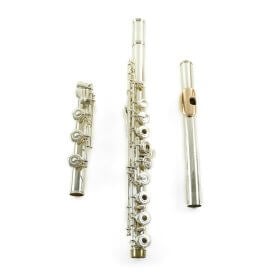
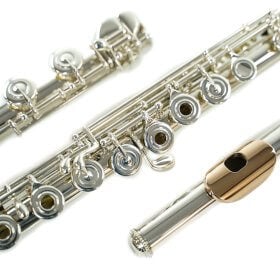
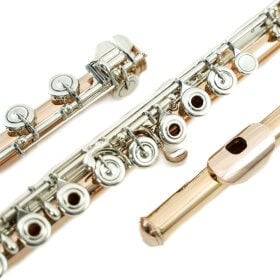
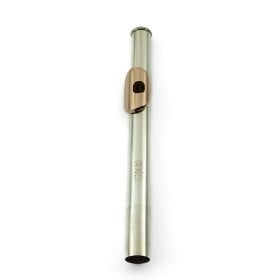
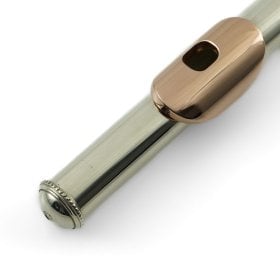
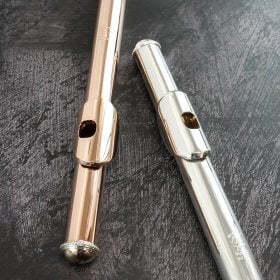
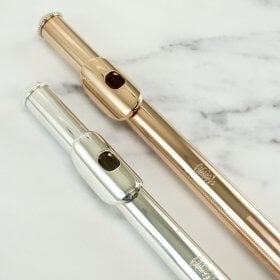
2008 – 5% Gold and Fusion materials are introduced for Custom Flutes (5% Gold Pictured below). The P style headjoint is also released.
2009 – In November 2009 Sir James Galway visits the Wm. S. Haynes Company.
2010 – Workshop moves to 68 Nonset Path, Acton, MA
Haynes moves to a state-of-the-art facility with improved manufacturing space, a beautiful showroom, and room to expand.
2012 – Haynes introduces a pinless mechanism for all Custom Flutes.
2012 – Haynes Amadeus Alto Flute is introduced.
2013 – The National Flute Association Haynes Challenge Endowment Fund
Haynes initiated this ground-breaking $125,000 fund-matching initiative in order to assist international artists appearing and performing at NFA Annual conventions, and beginning in 2019 to fund local youth events in convention host cities.
2013 – Haynes introduces the N Cut headjoint named after the Nagog Woods surrounding the workshop in Acton, MA
2014 – The Sir James Galway Model Q Series Flute is introduced.
2016 – New Lightweight Mechanism developed
In response to changing trends, a new Lightweight Mechanism was developed. The first flute made with this new mechanism was a 10K Flute #53535 (pictured). This is currently a standard option on Custom Flutes.
2016 – New Haynes Amadeus Models introduced – AF-580, AF-680, AF-780
2017 – The first 10K Flute with 14K Toneholes and Mechanism #53651 is made and becomes a standard option for 10K Flutes
2018 – Haynes Celebrates 130th Anniversary with events and celebrations around the world
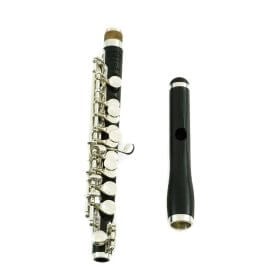
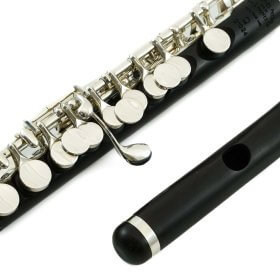
2018 – Haynes Amadeus Piccolo is introduced.
2019 – wmshaynes.com is redesigned to provide mobile access and detailed product information.
2020 – Haynes initiates Haynes University – a Music Education program put in place to support Haynes Artists and Flute Studios working remotely during the Pandemic. Over 3000 flutists have been reached since the program began, and Haynes University has now been designated as the “Education Wing” of the company.
2021 – Haynes launches a line of branded official merchandise – including T-shirts, hats, flasks and mugs.
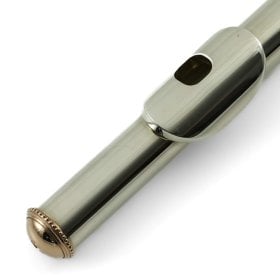
2022 – Haynes introduces Custom Decorative Crowns complete with engraving and precious stones.
2023 – Club88 for Educators was launched – rewarding teachers for showing their love for Haynes.
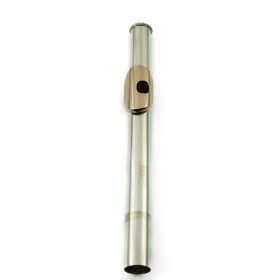
2023 – Haynes introduces the S Cut – the first new Custom Headjoint Cut in ten years.
2024 – Aiven O’Leary becomes President of Wm. S. Haynes Co.
Aiven O’Leary began working at Haynes in 2010 and accepted the role of General Manager in 2013. As the Haynes Master Head Joint Maker, in her career she has crafted over 10,000 hand cut head joints.