
Building a flute is an arduous task. A craftsman may spend 100 hours or more to build a handmade flute from start to finish and numerous individual operations are required to assemble hundreds of parts.
It all starts with design. A lot of decisions have to be made: the look, the feel, the scale, the materials, the headjoint cut and many more. The maker has hundreds of decisions to make based on production capabilities, the intended customer, and the desired price range.
The maker must settle on each detail, making countless drawings and producing many tools, jigs and molds. The many elements of design affect the success of the finished instrument, however design alone does not determine the quality. Each element of construction needs to be carefully controlled and performed with great attention. It is the combination of design, craftsmanship and materials that ultimately determine the quality of a flute.
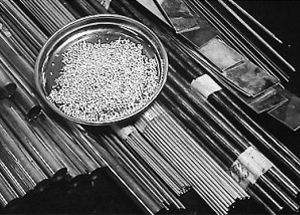
1. Raw materials, precious 1 metal rod, tubing and ingots for casting. Landell
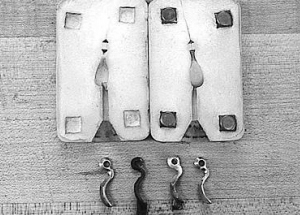
2. Each casting has an unique 2 mold. Landell
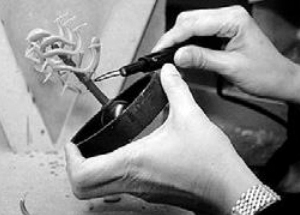
3. Setting waxes for 3 molding. Powell
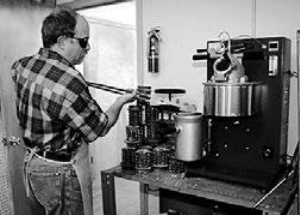
4. The casting department. Powell
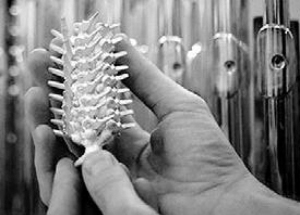
5. Casting in “trees” yields multiple parts. Powell
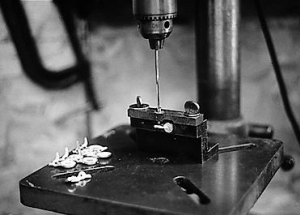
6. Castings are reamed to fit 6 tubing. Landell
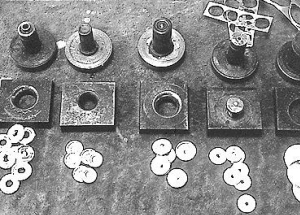
7. Key cups are “dapped” or 7 machined. Landell
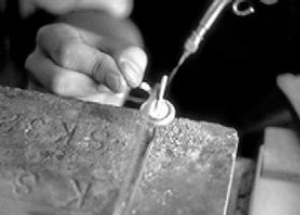
8. Silver soldering French 8 arms to the key cups. Altus
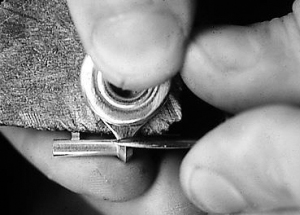
9. Each key receives 9 individual attention. Landell
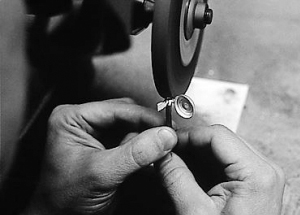
10. Each key is handfinished. Landell
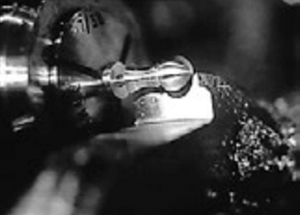
11. A post is formed. Landell
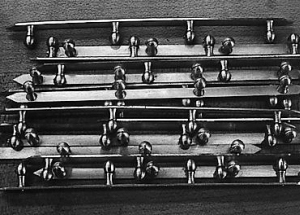
12. A posted rib assembly. Landell
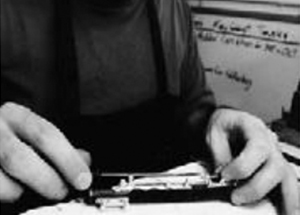
13. Testing steel in the post. Burkart
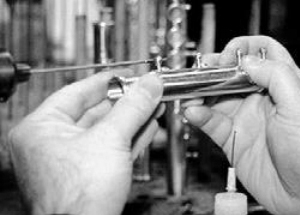
14. Reaming post holes. Powell

15. Body assembly components and an assembled body. Landell
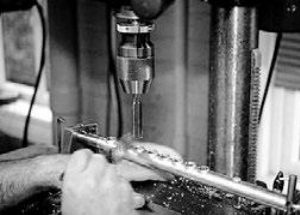
16. Reaming toneholes. Powell
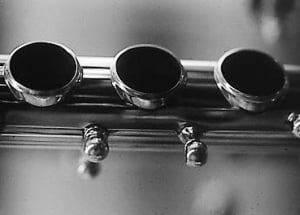
17. Soldered toneholes. Landell
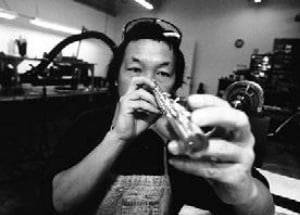
18. Lining up post and ribs on a body. Burkart
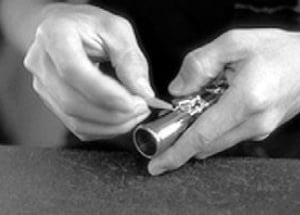
19. Checking pad coverage. Altus
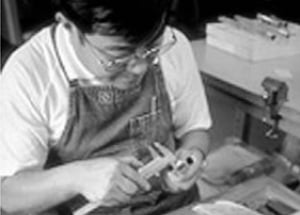
20. Each part is measured and tested repeatedly. Altus
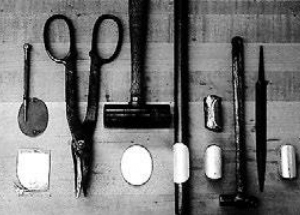
21. Hand-forming of a lipplate. Landell
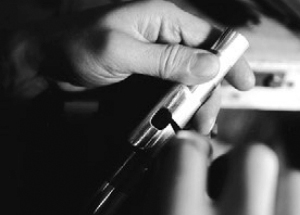
22. Undercutting. Altus
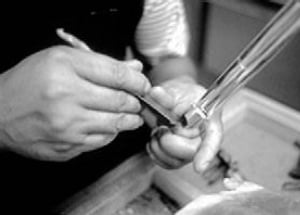
23. Overcutting. Burkart
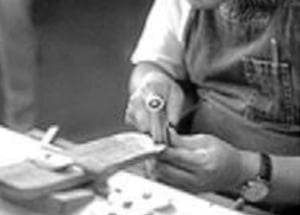
24. Setting a lip plate. Altus