
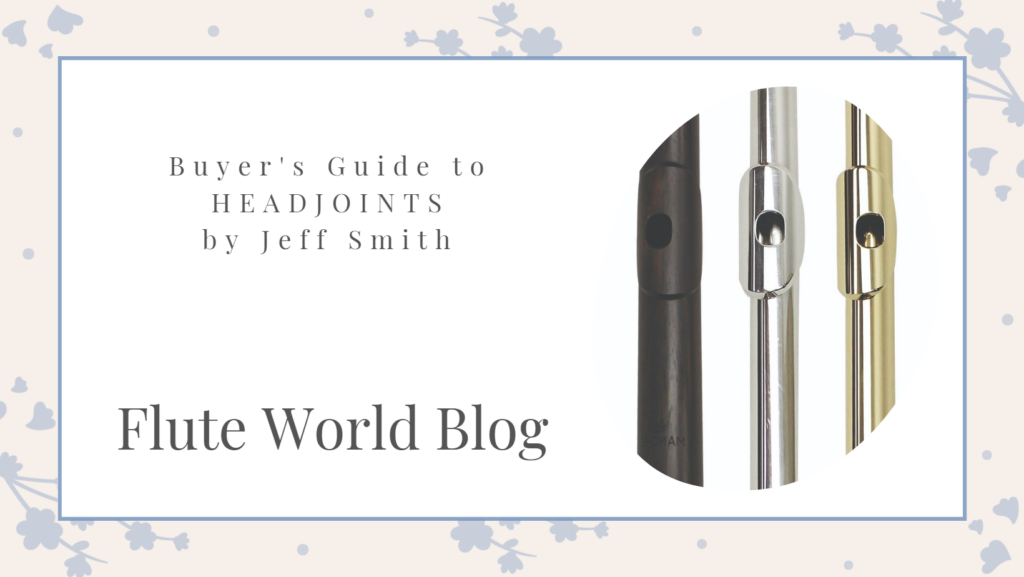
HEADJOINT BUYER’S GUIDE, by Jeff Smith
About Our Headjoints
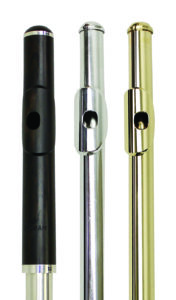
The headjoint must be considered the engine of the flute. It is the most personal piece of equipment for the flutist, and it is largely responsible for the tone and response of the instrument.
We have the artistry of the headjoint makers to thank for the strides that have been made in recent years towards the incredible level of performance that flutes now display. This is a result of very dedicated craftspeople and the competition that propels each to continually produce to the highest levels.
Student instruments have also benefited from enhancements in design and manufacturing techniques used in headjoints. Often we hear comments that certain student flutes of today play better than professional flutes of yesteryear.
Many musicians that play on an “old favorite” flute are very surprised by how much better their flute plays with a modern headjoint. Most performing flutists regularly test new headjoints to see if a change can bring benefits.
There are so many aspects to headjoint making, all of which interact with each other. One can liken the design and building of a headjoint to the creation of a food recipe. Ingredients may include different angles, tapers, radii, various dimensions, and materials.
No single aspect of making a headjoint can be considered the key to a masterwork. Rather, just as in a great recipe, it takes a careful and thoughtful combining of the ingredients and skilled hands to create a great headjoint. While all the great headjoint makers may include some undercutting of the hole, for example, it cannot be said that undercutting makes a great headjoint.
If that were true, then salt would make a great chicken soup.
We are determined to offer the best selection of headjoints that can update your old flute, or personally tailor your new flute.
Materials Used in Headjoint Production
There is considerable debate concerning the effects of materials on the sound generated by a headjoint. Many other factors come into play as well. As you search for your next headjoint, I encourage you to be open-minded and try any and every headjoint, whether it is silver, wood, stainless steel, or anything else! The important thing is the performance of the headjoint and the sound it produces, regardless of the material.
Silver: Headjoints made with silver tubing are the most popular headjoints that we sell, particularly with a gold riser or lip plate. Most silver used in headjoint making is sterling, or .925. These headjoints can be made with various wall-thicknesses, from thin (.014), to medium (.016), to heavy (.018). Silver tends to have a brilliant sound. Some say bright. Silver headjoints are well-matched to silver or silver-plated flutes. Most makers offer their silver headjoints with a choice of gold or platinum riser, or with a gold lip plate. Mancke’s metal headjoints are offered with a grenadilla wood lip plate. Changing the riser or lip plate material has a significant effect on the tone by enhancing the sound of the silver with some characteristics of the other material.
Gold: Gold tends to produce a warmer, richer sound than silver. This is often considered a darker sound. The most commonly used gold in headjoint making is 14K Rose Gold. Sheridan also makes a beautiful 14K White Gold. Some makers use higher purities as well. Gold headjoints are well-matched to silver or gold flutes.
Platinum: Platinum headjoints offer the ultimate in power and precision. The sound is penetrating and is sometimes considered bright. Brannen offers headjoints with a platinum tube and 14k lip and riser that is priced upon request. Miyazawa also offers platinum headjoints, also priced upon request. We see very few platinum headjoints on the market in the US. Perhaps it is because there are few platinum flutes. Or perhaps because of the high cost of this material. Regardless, if you are interested in a platinum headjoint, let us know and we’ll help you find the perfect one!
Wood: The most common wood used in headjoints making is grenadilla, but other exotic woods are available as well. Wood tends to produce a sound that seems warm and mellow when compared to metal. The wood headjoints featured in this guide (Abell, Mancke, and Young) are designed to fit modern metal flutes. We have sold many wood heads to buyers who intend to use them just for certain musical situations, only to find themselves later totally abandoning the metal head!
Parts of the Headjoint
Tube: Most headjoints use an extruded (factory-formed) tube. The tube in its original form is a straight cylindrical tube that is modified by the headjoint maker into a parabolic taper. The thickness of the tube varies from about .012” to .018.” Most players feel that a thinner tube has a quicker response time, while a thicker tube tends to be less responsive.
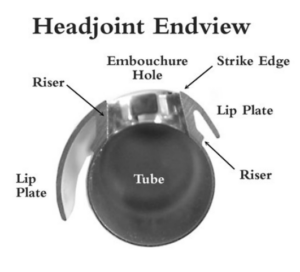
Lip Plate: This is the surface that the flute player’s lips rest on. The two main designs are the “saddle” or traditional and the “flat” or modern design. The flat design is considered to give the lips more comfort and flexibility as well as speeding up articulation and responsiveness.
Riser: The riser or chimney separates the lip-plate from the tube. The height of the riser affects the volume of sound the flute produces. A low riser is considered to have much easier pianissimos above high G with a lot of flexibility while a high riser will have a bigger, more straightforward sound but without as much flexibility.
Embouchure Hole: This is the hole that the player blows into. The embouchure hole is cut with various shapes and dimensions with some appearing mostly square and others more oval. A square cut tends to be louder, more strident in the higher register and reedy in the low register with a lot of resonance. The oval cut is considered to have more tonal color and sophistication. The embouchure hole can also be cut with a wide or narrow opening. A wide cut tends to be louder with a better high register while a narrow opening will favor the low register.
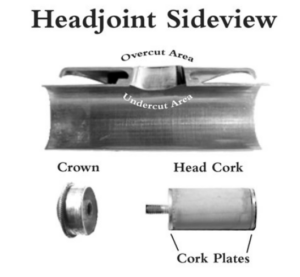
Stopper: Traditionally made from natural cork, this component is inserted in the tubing between the embouchure hole and the crown. The placement and density of the stopper material can affect the tonal quality of the instrument.
Crown: The crown closes off the headjoint tube and keeps the stopper in place.
Content Provided Courtesy of Rodger W. Young
