
There is considerable debate concerning the effects of materials on the sound generated by a headjoint. Many other factors come into play as well. As you search for your next headjoint, I encourage you to be open-minded and try any and every headjoint, whether it issilver, wood, stainlesssteel, or anything else! The important thing is the performance of the headjoint and the sound it produces, regardless of the material.
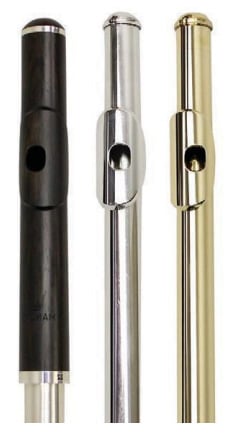 Silver:
Headjoints made with silver tubing are the most popular headjoints that we sell, particularly with a gold riser or lip plate. Most silver used in headjoint making is sterling, or .925. These headjoints can be made with various wall-thicknesses, from thin (.014), to medium (.016), to heavy (.018). Silver tends to have a brilliant sound. Some say bright. Silver headjoints are well-matched to silver or silver-plated flutes. Most makers offer their silver headjoints with a choice of gold or platinum riser, or with a gold lip plate. Mancke’s metal headjoints are offered with a grenadilla wood lip plate. Changing the riser or lip plate material has a significant effect on the tone by enhancing the sound of the silver with some characteristics of the other material.
Gold:
Gold tends to produce a warmer, richer sound than silver. This is often considered a darker sound. The most commonly used gold in headjoint making is 14K Rose Gold. Sheridan also makes a beautiful 14K White Gold. Some makers use higher purities as well. Gold headjoints are well matched to silver or gold flutes.
Platinum:
Platinum headjoints offer the ultimate in power and precision. The sound is penetrating and is sometimes considered bright or harsh. You’ll notice that there are no platinum headjoints listed in this guide. This is because there are few makers offering platinum headjoints as a part of their regular inventory. Brannen does offer headjoints with a platinum tube and 14k lip and riser that is priced upon request. Miyazawa also offers platinum headjoints, also priced upon request. We see very few platinum headjoints on the market in the US. Perhaps it is because there are few platinum flutes. Or perhaps because of the high cost of this material. Regardless, if you are interested in a platinum headjoint, let us know and we’ll help you find the perfect one!
Wood:
The most common wood used in headjoints making is grenadilla, but other exotic woods are available as well. Wood tends to produce a sound that seems warm and mellow when compared to metal. The wood headjoints featured in this guide (Abell, Mancke, and Young) are designed to fit modern metal flutes. We have sold many wood heads to buyers who intend to use them just for certain musical situations, only to find themselves later totally abandoning the metal head!