
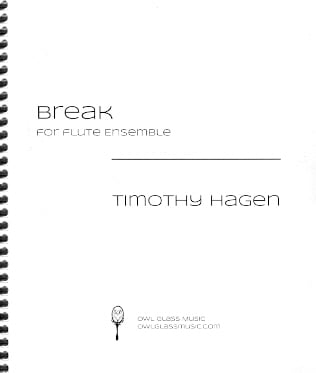


Break
Composed by Timothy Hagen
for Flute Choir
Published by Owl Glass Music
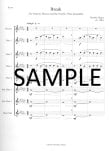
Includes score and parts
Instrumentation:
Piccolo
4 Flutes
2 Alto Flutes
Bass Flute
About the Piece:
At 9:42am on March 17, 2019, my world came unglued. My aunt called to tell me that my mother had suddenly, unexpectedly died.
I cannot even begin to express in words the emotions that come with losing a parent without warning. This work for flute choir, graciously commissioned by Darrin Thaves and the Pacific Flute Ensemble, is my first attempt to begin exploring those feelings.
Lately, I have been reading a great deal of poetry. Mary Oliver, one of our nation's most beloved poetic voices, died two months before my mother, and I had been exploring her work. When I read her poem “Lead,” about dying loons at dusk, I felt both touched and inspired. The poem begins with the text, “Here is a story to break your heart. Are you willing?” Since my heart was already broken, I was.
The piece that unfolded, Break, is meant to evoke the sounds of dusk: an insect chorus, and loons calling to each other. A mother loon teaches her baby how to call, how to soar. However, mother will not always be here, and the day comes when her child will call to her, and she will not answer.
Performance Notes:
Performing ensembles are encouraged to add or subtract players from parts as they see fit. For example, some groups may only want one piccolo at all times.
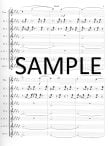
Rectangular noteheads indicate simultaneous singing and playing. This effect is notated at the pitch of the flute. Singing may be in unison or at the octave, any number of octaves lower. While singing, players are asked to cycle between the vowels “o” and i” (sounding ee): “oioioioioi….” Individual players should cycle between the vowels at their own pace and not try to synchronize with other players.
Flutter tonguing is notated with tremolo markings. The first instance in each part is marked with the German abbreviation “flz.”
Pitch bending should be accomplished by adjusting the embouchure and/or covering the blow hole. Additional fingers should not be added to notes that are bent. Bends generally take place over multiple beats at the ends of notes. Listen to loon calls (readily available on YouTube) to understand the effect desired.
– Timothy Hagen
Reviews
There are no reviews yet.