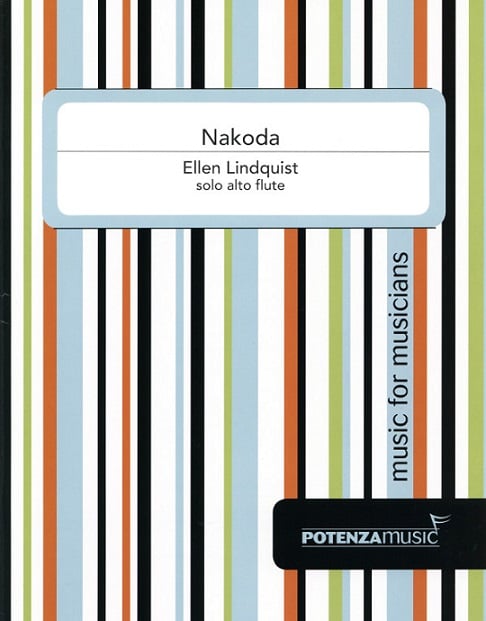


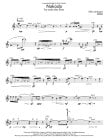
Nakoda for Solo Alto Flute by Ellen Lindquist
Commissioned by Erin Lesser
Extended techniques used: hollow tones, whistle tones; tongue rams; breathe in through flute, mouth covering hole; key clicks; key clicks articulating attack of blown pitch; pitch bends, sung pitches
Nakoda should be performed with amplification, in order that the percussive extended techniques be clear and audible. When possible, add some processed reverb. Suggestions for microphone position: if mic is placed slightly above the flute, the player can move toward and away from it as needed. One performer discovered that if the mic is in front of the right hand and aimed toward the headjoint, it is only necessary to move toward the mic for the whistle tones. Experiment to find a setup that works well for your sound and style of playing.
Nakoda is named for the alpha female of the Peter Lougheed wolf pack, who was killed – legally – by a hunter in Kananaskis country (near Banff, Alberta, Canada) on September 22, 2000. While wolves and other large predators essential to the ecological balance of the region are protected within the boundaries of Banff National Park (as well as other nearby protected areas), it is sadly still legal to hunt them outside of Park boundaries. Nakoda, herself named for the Nakoda First Nations tribe of the Bow Valley (among many other areas), was first collared in 1996 with a transceiver that allowed wildlife ecologists to obtain valuable data on the pack’s wide-ranging movements over the course of the year. (This kind of data can be used to help create laws that protect wolves and preserve critical habitat.) Nakoda is dedicated to the conservation of large predators everywhere – in particular the wolves of the Canadian and American Rockies.