
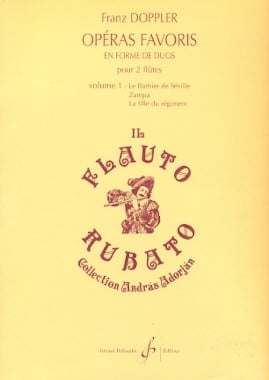


Operas Favoris, Vol. 1
(Favorite Operas)
Arrangement by Franz Doppler (1821-1883)
Edited by Andras Adorjan
Published by Billaudot
Duration: 21'40″
Includes score and parts
Contents:
1. Le Barbier de Seville
2. Zampa
3. La fille du regiment
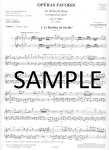
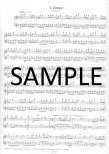
Franz Doppler was a flute virtuoso and composer best known for his flute music. The three operas comiques that Doppler arranged into duets are Rossini's Barber of Seville, Herold's Zampa and Donizetti's La Fille du Regiment. These are not the overtures to these operas, but are excerpts of each opera. In the Barber of Seville, excerpts are from the Overture, Conte's song “Ecco, ridente in cielo”, Figaro's “Largo al factotum dell citta”, Quintetto “Buona sera, mio Signore”, Conte and Figaro's duet “All'idea di quel metallo”, Rosina's “Una voce poco fa” and “Io sono docile, son rispettosa”, chorus “Mille grazie… mio Signore…”, Conte and Figaro's duet “Ah che d'amore”, Rosina, Conte and Figaro's trio “Zitti, zitti, piano, piano”, ending with Dalla Sinfonia. From Zampa, the overture, Camilla's air “A ce bonheur supreme”, chorus “L'echo de nos montagnes”, Zampa's “Que loin de moi ma belle” and “Il faut ceder a mes lois”, young girls choir “Au signal qui s'est fait entendre”, Camille's ballad “D'une haute naissance”, young girls choir “Dans ses presents que de magnificence”, Zampa's “Que de la vague ecumante” the conclusion of the Overture are represented. In La Fille du Regiment, Marie's “De cet aveu si tendre”, Marie and choir's air “Salut a la France!”, Marie and choir of soldiers' “Il a gagne tant de combats”, Marie's “Il est la, il est la, il est la, morbleu!”, Act II's Entr'acte Valse tyrolienne, and the soldiers choir “Rataplan, rataplan, rataplan” are represented.

Reviews
There are no reviews yet.