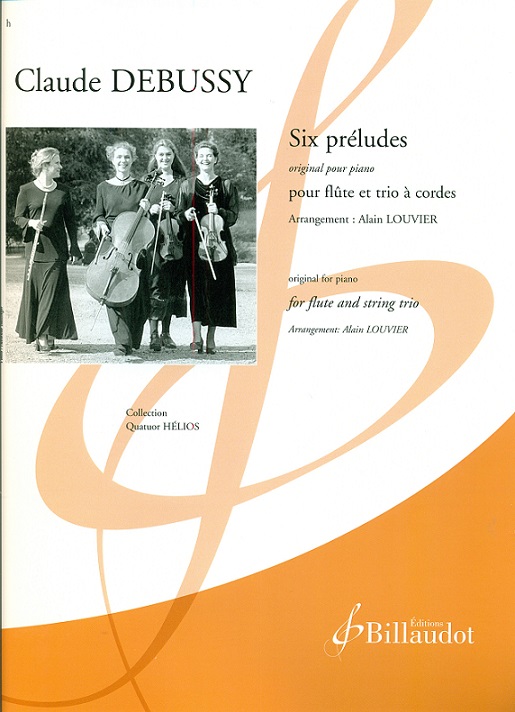


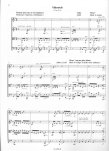
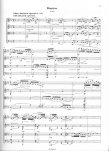


Six Preludes by Claude Debussy
Arranged by Alain Louvier for Flute, Violin, Viola and Cello
Score and parts
Duration: 18:30
I. Des Pas sur la neige (Footprints in the Snow)
II. La Serenade interrompue (The Interrupted Serenade)
III. Minstrels
IV. Bruyeres (Heather)
V. Hommage a Sire Pickwick PPMPC (Homage to Pickwick Esq. PPMPC)
VI. Canope (Canopic Urn)
-
From arranger Alain Louvier:
An ardent worshipper of Debussy for as long as I can remember, If aced a moral dilemma when I set out to arrange his marvelous Préludes.
To an arranger with orchestrating skills, this charming quartet for flute and string trio offers infinite possibilities for suble gradations of nuances: four virtuoso instruments, some polyphony but all with iridescent timbres…
Yet nothing in Debussy’s output could serve as a model for such work, except the much earlier String quartet and the Sonate for flute, viola and harp.’
Indeed, could one imagine La Cathédrale Engloutie (The Sunken Cathedra!) or La Terrasse des audiences du clair de lune (The Terrace for Moonlight Audiences) without the addition of a harp (that has nearly the same range as a piano)? Four non-resonant instruments cannot fully render the poetical, almost magical, long resonances of the low register of the piano.
Keen to remain true to the very essence of Debussy’s music, I restricted myself to a handful of Préludes.
After careful in-depth study of the music, I merely took the liberty of transposing a few extreme low register (keyboard) passages at the octave. I concentrated on six pieces, three in each book:
Book 1:
– Des Pas sur la neige (n° 6) (Footprints in the Snow)
– La Sérénade interrompue (n° 9) (The lnterrupted Serenade)
– Minstrels (n° 12)
Book 2:
– Bruyères (n°5) (Heather)
– Hommage à Sir Pickwick PPMPC (n° 9) (Homage to Pickwick Esq. PPMPC)
– Canope (n° 10) (Canopic Urn)Focusing on the piano timbre did not seem judicious. It made more sense to imagine Debussy orchestrating these pieces in the 1910s for a large ensemble (as in lbéria or Jeux, for example), then work on a reduction for a srnall orchestra of four instruments.
Hence the use of batteries (even in the flute part), tremoks and unusual doublings to evoke other (absent) timbres and generate the kind of polyphonie illusions French orchestrators liked so much.
I hope I did not overdo it in my attempt to be as creative – and use as many rare consonances – as Debussy himself
AlainWlMER